
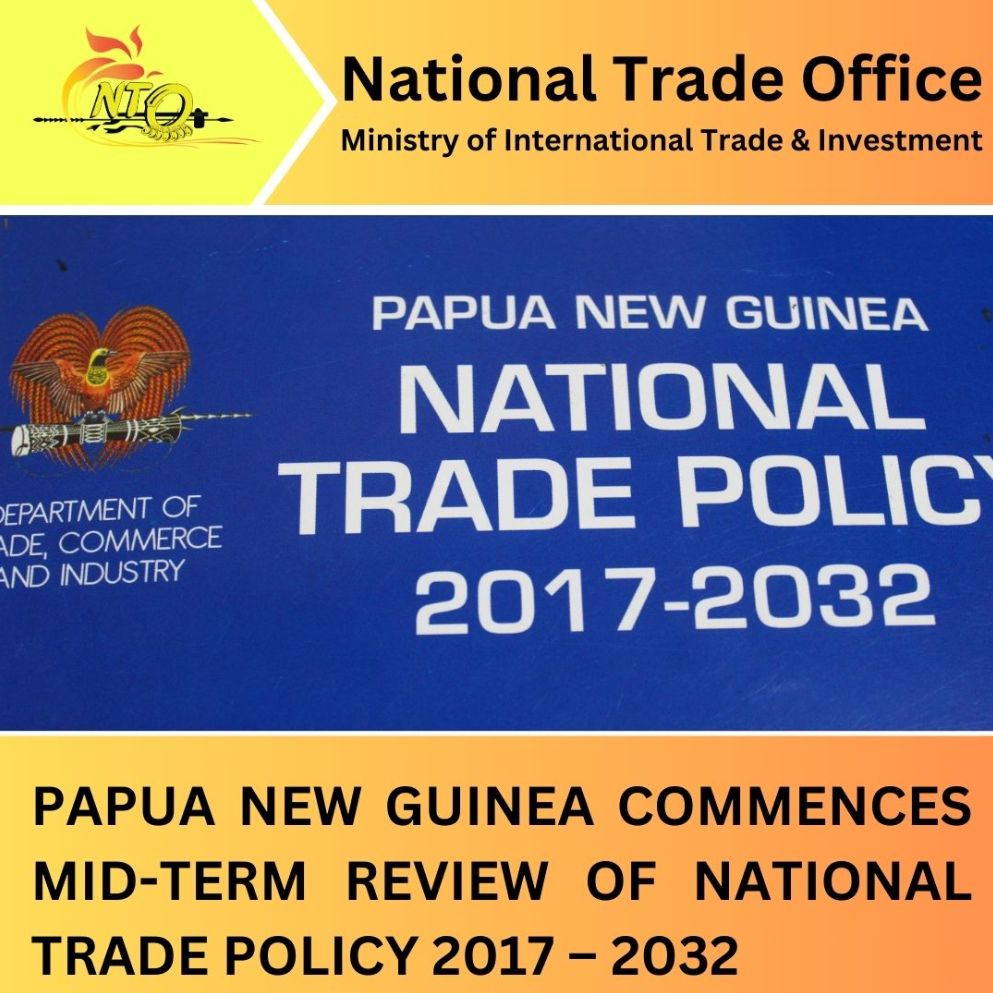
𝗣𝗔𝗣𝗨𝗔 𝗡𝗘𝗪 𝗚𝗨𝗜𝗡𝗘𝗔 𝗖𝗢𝗠𝗠𝗘𝗡𝗖𝗘𝗦 𝗠𝗜𝗗-𝗧𝗘𝗥𝗠 𝗥𝗘𝗩𝗜𝗘𝗪 𝗢𝗙 𝗡𝗔𝗧𝗜𝗢𝗡𝗔𝗟 𝗧𝗥𝗔𝗗𝗘 𝗣𝗢𝗟𝗜𝗖𝗬 𝟮𝟬𝟭𝟳 – 𝟮𝟬𝟯𝟮
𝗧𝗵𝗲 𝗠𝗶𝗻𝗶𝘀𝘁𝗿𝘆 𝗼𝗳 𝗜𝗻𝘁𝗲𝗿𝗻𝗮𝘁𝗶𝗼𝗻𝗮𝗹 𝗧𝗿𝗮𝗱𝗲 𝗮𝗻𝗱 𝗜𝗻𝘃𝗲𝘀𝘁𝗺𝗲𝗻𝘁, 𝘁𝗵𝗿𝗼𝘂𝗴𝗵 𝘁𝗵𝗲 𝗡𝗮𝘁𝗶𝗼𝗻𝗮𝗹 𝗧𝗿𝗮𝗱𝗲 𝗢𝗳𝗳𝗶𝗰𝗲 (𝗡𝗧𝗢), 𝗶𝘀 𝗽𝗹𝗲𝗮𝘀𝗲𝗱 𝘁𝗼 𝗮𝗻𝗻𝗼𝘂𝗻𝗰𝗲 𝘁𝗵𝗲 𝗰𝗼𝗺𝗺𝗲𝗻𝗰𝗲𝗺𝗲𝗻𝘁 𝗼𝗳 𝘁𝗵𝗲 𝗠𝗶𝗱-𝗧𝗲𝗿𝗺 𝗥𝗲𝘃𝗶𝗲𝘄 (𝗠𝗧𝗥) 𝗼𝗳 𝘁𝗵𝗲 𝗡𝗮𝘁𝗶𝗼𝗻𝗮𝗹 𝗧𝗿𝗮𝗱𝗲 𝗣𝗼𝗹𝗶𝗰𝘆 (𝗡𝗧𝗣) 𝟮𝟬𝟭𝟳-𝟮𝟬𝟯𝟮. 𝗙𝗿𝗼𝗺 𝗣𝗮𝗽𝘂𝗮 𝗡𝗲𝘄 𝗚𝘂𝗶𝗻𝗲𝗮’𝘀 𝗻𝗮𝘁𝗶𝗼𝗻𝗮𝗹 𝘁𝗿𝗮𝗱𝗲 𝗽𝗲𝗿𝘀𝗽𝗲𝗰𝘁𝗶𝘃𝗲, 𝘁𝗵𝗲 𝗠𝗧𝗥 𝗿𝗲𝘃𝗶𝗲𝘄 𝗶𝘀 𝗻𝗲𝗰𝗲𝘀𝘀𝗮𝗿𝘆 𝘁𝗼 𝗲𝗻𝘀𝘂𝗿𝗲 𝘁𝗵𝗲 𝗡𝗧𝗣 𝗶𝘀 𝗼𝗻 𝘁𝗿𝗮𝗰𝗸 𝘁𝗼 𝗮𝗰𝗵𝗶𝗲𝘃𝗲 𝗶𝘁𝘀 𝗴𝗼𝗮𝗹𝘀 𝗮𝗻𝗱 𝗿𝗲𝗰𝗮𝗹𝗶𝗯𝗿𝗮𝘁𝗲 𝘁𝗵𝗲 𝗰𝗼𝘂𝗻𝘁𝗿𝘆’𝘀 𝘁𝗿𝗮𝗱𝗲 𝘀𝘁𝗿𝗮𝘁𝗲𝗴𝘆 𝗶𝗻 𝗹𝗶𝗴𝗵𝘁 𝗼𝗳 𝗰𝘂𝗿𝗿𝗲𝗻𝘁 𝗻𝗮𝘁𝗶𝗼𝗻𝗮𝗹 𝗮𝗻𝗱 𝗴𝗹𝗼𝗯𝗮𝗹 𝗰𝗵𝗮𝗹𝗹𝗲𝗻𝗴𝗲𝘀.
This review is made possible through the assistance of the European Union Delegation to PNG under the EU’s Multi-Annual Indicative Programme, 2021 – 2027 funding facility, in alignment with the MTDP IV and the EU’s Global Gateway Strategy, which has enabled the engagement of GFA Consulting Group to assist the NTO in the review.
PNG’s trade performance and policy implementation over the past eight years need a thorough assessment so that successes can be built upon and shortcomings addressed. The review will help PNG align its trade policy with recent domestic priorities (such as the Medium-Term Development Plan and post-COVID economic recovery) and external developments (like environmental considerations, new market opportunities in Asia and evolving World Trade Organization rules).
Providing evidence-based analysis and guidance to the PNG government will demonstrate accountability for earlier capacity-building investments (e.g., the EU’s support in developing the NTP) by evaluating outcomes to date. Moreover, the project enables support for PNG in adopting international best practices, fostering stakeholder engagement, and ultimately ensuring that trade policy remains effective and relevant.
Essentially, there will be three main elements to the review: the first is a retrospective assessment of the NTP to take stock of the progress, determine how effective the policy measures have contributed to the attainment of the objectives and identify key challenges with implementation. The second is a prospective assessment, which takes into account the current and emerging trade issues at the international and national levels and recommendations for adjustments. Thirdly, there will be a review of the National Trade Policy’s Strategic Implementation Plan (SIP) and integration of its findings.
Over the next several months, until November 2025, the National Trade Office will be engaged in extensive consultations with all concerned stakeholders. The NTO will lead; however, input from other government departments, agencies, provincial representatives, and regulatory bodies is necessary to gauge cross-sectoral progress. The private sector and SMEs will be consulted to understand the on-the-ground impacts of the trade policy and persistent business barriers. Civil society and academic experts can offer insights on inclusiveness (e.g., the impacts on small farmers or women traders) and provide evidence-based critiques. International and regional actors are also key stakeholders.
The WTO context is important, as PNG’s policy should align with its multilateral commitments, since PNG’s 2019 Third WTO trade policy review welcomed the NTP as a framework for such alignment.
Development partners like the European Union, which supported PNG’s trade capacity under the 11th EDF and helped fund the NTP’s formulation, have a stake in the policy’s success and are providing technical input or resources for the midterm review.
Australia and New Zealand, as major trade partners and aid providers in the Pacific, along with regional bodies such as the Pacific Islands Forum and Melanesian Spearhead Group, are interested in PNG’s trade reforms and regional trade integration efforts. These partners will be engaged to ensure that the midterm review captures opportunities for regional cooperation and technical assistance. Likewise, PNG’s participation in APEC provides avenues to adopt best practices from Asia-Pacific peers.
Therefore, it is important for all concerned stakeholders to be part of the review that provides an opportunity to realign the NTP with current realities, ensuring its strategies remain relevant in the face of climate change impacts, advances in information technology, commodity price fluctuations, potential global trade disruptions due to US tariffs and shifting investment patterns. Accordingly, the National Trade Office will be inviting concerned stakeholders to participate in this Mid-Term Review exercise, with the final report expected to be presented to the government by January 2026.
Approved By:
Richard Yakam
Chief Trade Officer
