
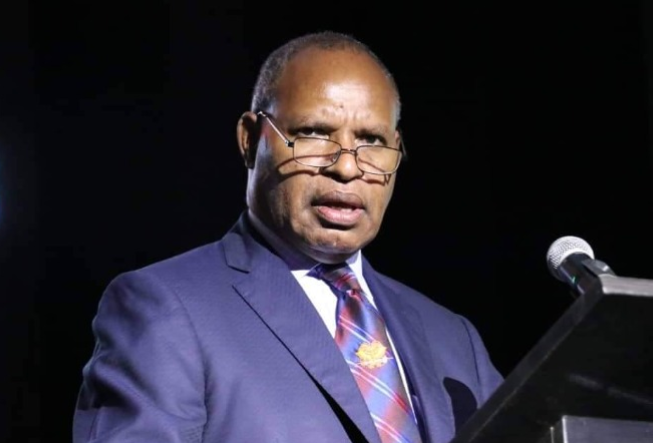
Port Moresby, PNG — Papua New Guinea’s Minister for International Trade and Investment, Richard Maru, has called again for an immediate and comprehensive review of the nation’s import tariff policies to shield local industries from the adverse effects of cheap and dumped imports.
Expressing frustration with the current tariff administration, which he labeled as “unilateral, discriminatory, and arbitrary,” Maru emphasized the need for urgent reform to bolster domestic manufacturing.
The Tariff Reduction Program (TRP), implemented in 1999 as part of a broader structural adjustment initiative, was intended to enhance economic efficiency and foster a competitive private sector by gradually reducing tariffs.
Approximately 80% of import tariffs have since been liberalized, with protective rates progressively lowered. However, Maru questioned the program’s effectiveness, noting that Papua New Guinea’s economic structure remains largely unchanged. Local manufacturing contributes only 3-6% to GDP, with the country still heavily reliant on raw commodity exports and imported goods that could be produced locally.
Maru highlighted unfair trade practices by some foreign businesses and countries, which leverage subsidies to flood Papua New Guinea’s market with cheap, dumped goods. These imports, sold below normal market prices, undermine local manufacturers, forcing them to scale down or cease operations.
“Tariffs are a critical trade policy tool to address such unfair practices,” Maru stated, pointing out that Papua New Guinea’s lower production costs are not matched by similar government subsidies, leaving local industries vulnerable.
The minister also criticized the lack of leverage in trade negotiations due to Papua New Guinea’s zero-rated tariffs, which he argued provide foreign markets unrestricted access without reciprocal benefits. Maru noted that other nations effectively use tariffs to attract investment into their manufacturing sectors, a strategy Papua New Guinea has underutilized.
Further, Maru raised concerns about the exclusion of key trade and investment agencies from tariff-setting decisions and stressed the need for a policy responsive to global trade dynamics, including digital advancements and geopolitical shifts.
To address these issues, Maru has instructed the National Trade Office, in collaboration with the Department of International Trade and Investment and the Department of Treasury, to form a Tariff Working Group. This group will include trade and investment agencies, private sector representatives, and the broader business community.
Its mandate is to develop strategies to enhance Papua New Guinea’s tariff policy, attract investment, grow the domestic manufacturing sector, and strengthen future trade agreements.
hashtag
hashtag#ExepreneurFinance hashtag
hashtag#RichardMaru hashtag
hashtag#PapuaNewGuinea
